Cremation as a Multicultural Proxy: An Integrated Osteobiographical and Literary Analysis of Cremation Practices from the Hellenistic to the Roman Period in Thessaloniki

  Bantavanou, Panagiota. "Cremation as a Multicultural Proxy: An Integrated Osteobiographical and Literary Analysis of Cremation Practices from the Hellenistic to the Roman Period in Thessaloniki." CHS Research Bulletin 14 (2026). https://nrs.harvard.edu/URN-3:HLNC.ESSAY:107279771.


Laboratory of Biological Anthropology, School of Humanities, Democritus University of Thrace / Institute of Applied Bioarchaeological Research, Democritus University of Thrace
CHS Pre-doctoral Fellow in Hellenic Studies 2025–26

Introduction

Death and funerary practices constituted a vital pathway of cultural expression and social identity of past societies. The complexity of the burial rites is being portrayed archaeologically through the variety of grave types (i.e. cists, tailed, tumuli, sarcophagus), the grave goods complementing the deceased, the location of the cemeteries (i.e. in housed, inside or outside the city walls, cemeteries), the iconography of ceramic vessels and the existence of two different burial practices, inhumation and cremation. Inhumation regards the placement of the deceased in the soil deposition that constitutes the burial grave, and is the most familiar burial practice dominating in the modern world. In cremations the deceased was exposed to the fire of the burial pyre, and the cremated remains were placed directly in a grave or secured in a funerary container (urn or sarcophagus) that was placed in a grave. Despite the differences, the two practices co-existed for centuries with the dominance shifting between the two practices (Pearce, 2017).
Cremation was practiced in the ancient world since the Mesolithic period (Rotterdam, 9000BP, according to Niekus et al., 2016) reaching the highest frequency in the Hellenistic and Roman periods. Cremation was not a standard practice, but a complex procedure requiring extensive wood load, prolonged attentiveness, sufficient air ventilation for complete cremation and expertise of the cremator. Archaeological studies have indicated the existence of different cremation practices based on chronological periods and locations, revealing the evolutionary character of the practice (Musgrave, 1990; Ubelaker & Rife, 2007). However, there are no prominent indicators of different cremation customs or a path of the practices’ evolution.
Cremated skeletal remains offer valuable information regarding the life (Pearce, 2017), health (Martín et al., 2022), mobility (Frère et al., 2025), ancestry, diet (Snoeck et al., 2025) and further burial customs of past populations (Becerra Fuello et al., 2025; Stamataki et al., 2025) integrating bioarchaeological and physicochemical analyses. Advances in histological, elemental, and molecular analytical methods have demonstrated that cremated bones retain a substantial amount of information regarding burning conditions, pyre environment, and post-cremation treatment (Gonçalves et al., 2015; Stamataki et al., 2021; Walker et al., 2008). Histological analysis can provide reliable estimates of age-at-death and temperature through the examination of alterations induced to bone’s basic microstructures (secondary and fragmentary osteons) (Bantavanou et al., submitted). Elemental analyses, such as Scanning Electron Microscopy coupled with Energy-Dispersive X-ray spectrometry (SEM-EDS), allow for the identification of chemical alterations in bone mineral composition, revealing crystallization patterns and trace elements associated with pyre materials, fuel, or external influences (Ellingham et al., 2017; Shehata & Krap, 2024). Similarly, Fourier Transform Infrared Spectrometry (FTIR-ATR) enables the assessment of molecular changes in bone mineral and organic components, offering insights into crystallinity, carbonate loss, and collagen preservation as a function of temperature and cremation record (Colmenares-Prado et al., 2026; Stamataki et al., 2021). The multi data produced by the technological advances have offered valuable information on the understanding of bone’s biochemical and structural alterations under the effect of fire and high temperatures. However, there are limited studies examining the temperature effect with a potential variation of cremation practice with no clear indications (Pearce, 2017).
Ancient Greek and Latin literatures describe the ideology and symbolism of cremations, as well as the funerary rites and construction of the pyre. Ancient Greek and Latin writers, such as Diodorus Siculus (20.14.5-6, 19.33-34) and Virgil (Aeneid 6.212-235, 11.182-224), narrate historical and mythical events through which details regarding cremations are revealed.
In this study an interdisciplinary approach will be employed to investigate cremation practices between the Hellenistic (323-31 BCΕ) and Roman (31 BCE-324 CE) periods in Greece showcasing the example of Thessaloniki. The city of Thessaloniki provides an especially suitable context for such an investigation. As a major urban centre founded in the Hellenistic period (316 BCE), flourishing throughout the Roman era, the city reflects cultural interactions between Greek traditions and Roman administrative and social structures (Adam-Veleni, 2001, 2012; Valakopoulos, 1983). Its cremation assemblages therefore offer a valuable opportunity to explore continuity and change in funerary practices across a significant chronological and cultural transition.
An interdisciplinary approach will be incorporated applying advanced anthropological techniques (light histology, elemental analysis using SEM-EDS and molecular analysis using FTIR-ATR) combined with ancient Greek and Latin literary sources. Specifically, the study aims to examine how cremation is represented in ancient literature and assess the extent to which these representations relate to the bones’ biochemical and histological alterations suggesting different practices between chronological periods.
Through the integration of textual and scientific evidence, this research contributes to a more nuanced understanding of ancient cremation as both a cultural and technological practice. It demonstrates the potential of cremated remains to yield detailed information about funerary behaviour and highlights the importance of interdisciplinary approaches for bridging the gap between ancient ideology and material practice.

The Timeline of Cremation in Europe

The first indications of cremation in Europe as a burial practice have been recorded in Rotterdam (Amsterdam, according to Niekus et al., 2016) and Ofnet cave (Bavaria, according to Gil-Drozd, 2011) dated back to the Mesolithic period (9000 BP). Throughout the Mesolithic and Neolithic periods cremations are sparce, scattered and only in a few cases do they appear in organized contexts (Davies & Mates, 2005; Gil-Drozd, 2011). The Bronze age constituted a breaking point, where a substantial progressive increase in the frequency of cremations took place leading to the rise of the Urnfield Culture, that lasted from 1300BCΕ to 750BCΕ (Lemmers, 2012; Rebay-Salisbury, 2017; Stig-Sørensen & Rebay-Salisbury, 2023). Urnfield Culture was extended to the central and west Europe (Masotti et al., 2020) and named after the practice of utilizing funerary urns containing the cremated remains and depositing them in the final ground grave.
A little later, but also in the same timeframe (1200-450BCΕ) Hallstatt, located in Austria (central Europe), developed distinctive burial practices whose influence expanded through time leading to the rising of the Hallstatt Culture (Davies & Mates, 2005). The highlight of Hallstatt lays to the noticeable discrimination of cremation over inhumation according to the social status of the deceased. Based on the archaeological records, the west cemetery was dominated by inhumations with a few cremations included, whilst cremations with elite wealth dominated the east cemetery (Parditka & Duffy, 2023; Rebay-Salisbury, 2017, 2018). The practice of cremation extended to North Europe during the Iron Age (Davies & Mates, 2005; Fahlander, 2025) and a localized dominance is observable until the Roman period when cremations dominate in the majority of the locations (Lippok, 2020; Masotti et al., 2020; Nock, 1932; Wolska et al., 2024).
In Greece the first cremations are tracked back to the Early Neolithic period, with a small number scarcely observed between inhumations. During the Late Neolithic cremation spreads throughout the Helladic space. Through this extended practice different patterns of custom preferences are displayed through the location of the graves as independent graves or organized cemeteries (Fowler, 2004; Gallis, 1975; Perlès, 2003; Triantafyllou, 2001). With the beginning of the Bronze age, the practice of cremation was abandoned contrary to the rest of the Europe where the cremation continues to flourish (Lewartowski, 1998). At the end of the period and Early Iron age, cremations reappear scarcely (Ruppenstein, 2013), whilst the Early Archaic period signs the establishment of cremations as a burial practice (Alexandridou, 2020; Bosnakis, 2001), that continued to increase in frequency until the end of the Roman period. During the Hellenistic period cremations are found mostly at the urban centers rather than the rural areas and exhibit exceptional wealth of grave goods (Aidonis, 2011). During the Roman period cremations extend to the countryside displaying a variation of grave goods while the use of stone and marble sarcophagus is dominating (Lamprou et al., 2018; Ubelaker & Rife, 2007).

The site: Thessaloniki

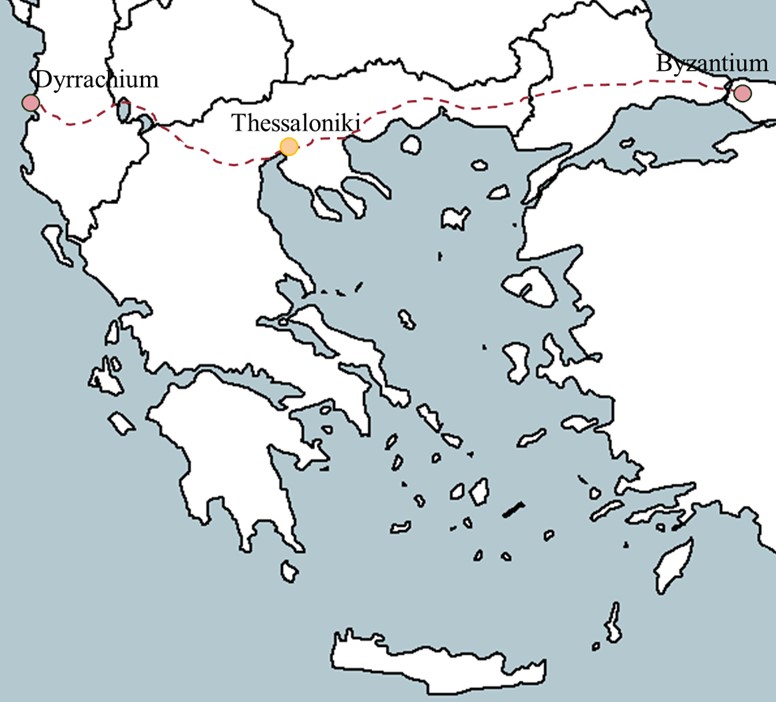
Thessaloniki is located in Northern Greece and is built upon the coastline of the Thermaic Gulf (Fig. 1). It has been inhabited since the Late Neolithic period but was officially founded in the Early Hellenistic period (316/ 315 BCE) by Cassander, the brother-in-law of Alexander the Great. Cassander exploited the geographical position, the arable earth, and the commercial port transforming Thessaloniki into a significant urban and trade cross-road of the ancient Mediterranean world (Adam-Veleni, 2001, 2012; Valakopoulos, 1983). After 168 BCE Thessaloniki was designated the capital of the Provincia Macedonia of Roman Empire. As a capital with an extended commerce, it attracted merchants from all over the Mediterranean world but also invaders trying to conquer and benefit from the magnitude of the city leading to the rise of the city’s multicultural character (Adam-Veleni, 2012; Soueref, 2011).
Rescue archaeological excavations uncovered the two cemeteries of the ancient city outside the fortified walls, dated from the Hellenistic (323 BCE) to the Post Byzantine period (15th-19th c. CE) (Fig. 1). The skeletal remains included in this study were unearthed mainly from the west cemetery and date to the Hellenistic (323 – 31BCE) and Roman period (1st c. BCE – 4th c. CE) (Acheilara, 2007; Tsimpidou-Avloniti, 2007).
The study of this archaeological dataset offers significant information regarding the cultural influences on burial customs imported to an urban city of high importance. Cremations constitute an important pool of information regarding the ancient world and especially about the cultural behaviour of a community. Archaeological evidence indicate the existence of differences in cremation customs between chronological periods and geographical locations (Musgrave, 1990; Ubelaker & Rife, 2007). Thus, the city of Thessaloniki offers the optimal diachrony to compare the most important eras of the practice of cremation, the Hellenistic and Roman periods.
Figure 1. Map of Greece. A round point marks the city of Thessaloniki while the dashed line represents the Via Egnatia.

Methods

Ancient Greek and Latin Literature

Databases of literature were utilized to detect references of cremations and funerary rites in ancient Greek and Latin texts. Lexical inputs, specifically, “pyra”, “rogus”, “ καύση”, “πυρά”, were inserted for search in the databases of Thesaurus Linguae Graecae (https://www.stephanus.tlg.uci.edu/), Thesaurus Linguae Latinae (https://www.thesaurus.badw.de/tll-digital/tll-open-access.html/) and Loeb Classical Library (https://www.loebclassics.com/), while author names, such as Virgil, Cicero etc. were inserted in the Perseus (https://scaife.perseus.org/) ancient Greek and Latin repository.

Osteological Material and Anthropological Methods

For this study 32 individuals from the city of Thessaloniki were utilized to assess their cremation process. Specifically, 13 were from the Hellenistic period, 12 from the Roman period and five ranged through the Hellenistic and Roman periods. The Thessaloniki skeletal collection is housed at the facilities of the Institute of Applied Bioarchaeological Research of the Democritus University of Thrace (DUTh). The histological analysis was conducted in the Laboratory of Biological Anthropology of DUTh, the FTIR-ATR analysis was conducted at the CRETUS – Cross-disciplinary Research Center in Environmental Technologies of the Universidade de Santiago de Compostela and the SEM-EDS analysis was conducted at the Digital Manufacturing and Materials Characterization (DMMC) Lab of the International Hellenic University. Three blocks (1cmX1cm) of each femur were removed from the midshaft of the bone anteriorly and used for the three different methods (Histology, FTIR-ATR, SEM-EDS). The skeletal analysis was conducted with the approval (395896–83422/04–6-2021) granted by the Ephorate of Antiquities of the City of Thessaloniki, the regional service of the Ministry of Culture responsible for the protection and scientific research of ancient cultural heritage.

Light Histology

Histological analysis was previously conducted for assessing the age-at-death and temperature estimates (Bantavanou et al., submitted). The bone blocks of femurs were processed according to the protocol of Bantavanou et al. (2022) developed at the Laboratory of Biological Anthropology. In brief, the specimens underwent a rapid cleansing in an ultrasonicator with double-distilled water, were infiltrated in xylene (BioClear, BIOGNOST CR) for 24 hours and embedded in two parts (resin and hardener) of epoxy resin (EpoFix, Struers). After the complete stabilization of the resin (72 hours) ground-sections of less than 0.5mm were cut using an Isomet Low Speed Shaw (Buehler) with a diamond surface cutting disk and were thinned-out to 100-80μm using a semi-automated grinder and polisher Labopol-20 (Struers). Finaly, the polished sections were mounted on slides for standard microscopical analysis with mounting medium (BioMount DPX, BIOGNOST CR). For the histological analysis, microphotographs (magnification x100) of the sections were captured with a digital camera AxioCam Icc3 (Zeiss), on an Axioscope A1 (Zeiss) optical microscope under transmitted and polarized light. For the observation and measurements of the microstructures we used Fiji software (Java 1.8.0_322). The same sample preparation was applied to the samples from the archaeological cremations.
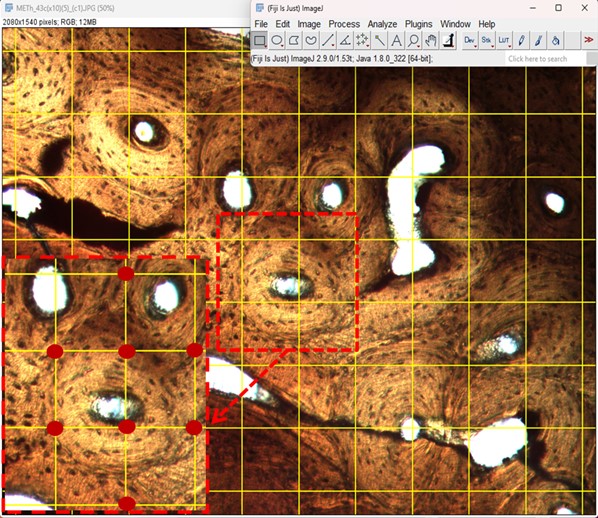
For assessing age-at-death the method of Bantavanou et al. (submitted) was applied. In summary, a grid of 1mm2 is superimposed on 10-15 micro-images (see Figure 3), and the total number of secondary osteons, osteon fragments, and their surrounding and overlapping intersections are counted and combined across all micro-images (Fig. 2). The HD value was then determined by dividing the total number of microstructures by the total area they occupy. Finally, the HD values were calibrated based on the temperature estimation of the cremated bone and applied to the regression equation for age estimation.
Figure 2. A micro-image (magnification X100) of a cremated femur bone presenting the applied methodology for age-at-death estimation.
Temperature was assessed utilizing the regression equation of osteon minimum diameter. In more details, approximately 40 measurements of osteons’ minimum diameter were recorded and the mean value was calculated. The value was applied to the relevant regression equation providing temperature estimates. The temperature estimates indicate the burning temperature that the specific specimen suffered and not the temperature of the whole cremation (For further details about histological analysis see. Bantavanou et al., submitted).

Scanning Electron Microscopy – Energy Dispersive X-ray Spectrometry (SEM-EDS)

Bone samples of 0.5cm X 0.5cm dimension, were removed for elemental analysis. The trabecular bone was ground to create a solid base for the sample holder. In order to record at higher resolution, the elemental alterations due to high temperatures a part of the anterior surface was ground reaching the middle part of the bone. Since cremated bones do not carry any soft tissue there was no necessary pre-process. The samples were stabilized on a sample holder and analyzed under low vacuum in a Desktop Scanning Electron Microscope (SEM) (Phenom) at the Digital Manufacturing and Materials Characterization Laboratory.
EDS measurements were captured localized at a magnification of X1000, with 15kV voltage, using a BSD detector. The measurements included the elements that constitute the basic bone properties, meaning the hydroxyapatite (Ca and P) and collagen (Si, K, Cl), elements that are susceptible to environmental conditions (O and C), as well as trace elements that can reveal influence from external objects (Mn, Mg, Fe, Na, S and Al). Ratios of elements that are indicative of high temperature bone transformations (C/P, Ca/P, Ca/O, C/O) were examined tailored with the presence of other compounds endeavoring their correlation with chronological period or within group differences. The ratios were examined for their correlation with temperature and the chronological period using the proper correlation test.

Fourier Transform Infrared Spectrometry – Attenuated Total Reflection (FTIR-ATR)

Bone samples weighting approximately 300gm, were removed for FTIR-ATR analysis. The samples were cleansed five times with double distilled water in an ultrasonic bath for 10 minutes each time. Then, they were left to air-dry with the use of a hood for two days. Finally, the samples were powdered using a semi-automated bead mill (MM400, Retsch) and finely pulverized with a mortar and pestle.
The FTIR analysis of the samples was conducted using an Agilent Cary 630 FTIR spectrometer. The absorbance was recorded within the spectral range of 4000-400cm-1, with 100 scans and spectral resolution at 4cm-1. After each measurement the background was scanned to reassure the stability of the baseline. The basic indices (i.e. Ca/P, C/P, C/C) correlated with the cremation process were calculated to explore the molecular alterations that reveal differences of cremation practices. Further analysis of the spectra was conducted in order to interpret the elemental compositions derived from SEM-EDS analysis.
FTIR-ATR spectra were analyzed using Orange software (Demšar et al., 2013). The resulting data of all methodologies were statistically processed with R software (Posit team, 2025).

Results

Funerary rites in ancient literature
Thesaurus produced in total 450 results with the word and derivatives of “πυρά” with only 18 related with human cremation and dated between the 4th c. BCE and 3rd c. CE. The word “καύση” produced 1.274 from which 70 were dated between the 4th c. BCE and 3rd c. CE and only five related to human cremations. Loeb Classica Library returned six results between the 4th and 2nd c. BCE and 59 between the 1st c. BCE and 3rd c. CE, all unrelated to human cremations. The word “καύση” returned no results. The Latin word “pyra” returned six results for the 1st c. BCE to 1st c. CE from Ovid, Virgil, Livy and Justin, all related to human cremations and two more results between 2nd c. to 4th c. CE. The word “rogus” returned seven results between the 1st c. BCE to the 1st c. CE, five in the 2nd c. CE with two related to cremation, and two sources unrelated to cremations dated in the 3rd c. CE.
According to Greek mythology and ancient history, the first king of Athens Cecrops, initiated the funeral rites, whilst during the 6th century BCE Solon was the first to legislate detailed rules for the funeral rites and procedures (Retief & Cilliers, 2010). As standard funeral rites prothesis, ekphora and burial were instituted. However, in ancient literature pre-death traditions are also described.
When someone was ready to depart to the underworld the body was placed on the ground (depositium) and family members were surrounding it. By the time of death, the closest relative was obliged to kiss the deceased, catching the final breath, that was considered as the exit of the soul, preventing the eternal wandering of the soul. Then the eyes of the deceased were closed and the family members were exclaiming the name of the deceased (conclamatio), signing the death of the person (Heller, 1932; Jones, 2013).
After the confirmation of death, the deceased was placed on a bed (cline) as mentioned by Greek customs, or a couch according to Roman customs. The body was washed with warm water and dressed with a tunic (toga) [1]. The dressed linen was selected according to the social and financial status of the deceased. The higher status, that of the Emperor, was utilising purple linens while rings carrying the emperors’ sign were also placed on the body. Individuals of higher status were dressed with white toga, while poor individuals were dressed with black if they could afford one. Deceased individuals of high financial and social status sometimes were also covered with oils and facial makeup in order to slow down decomposition. After the treatment of the body was finalized, the house of the deceased was open for the prothesis.
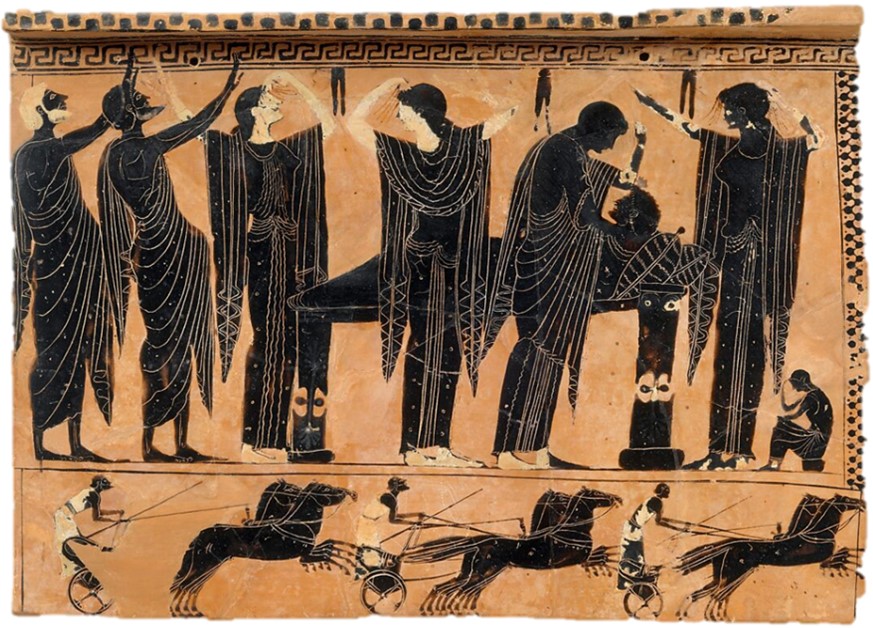
Prothesis refers to the indoor exhibition of the deceased placed on a cline (bed) or lectus funebris surrounded by professional mourners and female family (Heller, 1932; Jones, 2013; Retief & Cilliers, 2010) (Fig. 3). The deceased was located in the bedroom of the house according to Greek customs or at the atrium according to Roman customs. In exceptional cases the vestibulum was also used. The state of prothesis endured from three to seven days, depending on the social status of the deceased, and the capability of body preservation, while low status individuals remained at prothesis from one to three days. A few sources mention the placement of flowers around the body, probably to stimulate the odour of the body. During prothesis male or female friends, depending on the biological sex of the deceased, visited to pay their condolences to the family and say the last farewell, under the mourning songs and cries of the professional mourners (Retief & Cilliers, 2010).
Figure 3. A terracota showing the professional mourners, the male visitors paying their respects, and the wife of the deceased on his side during the prothesis (National Archaeological Museum).
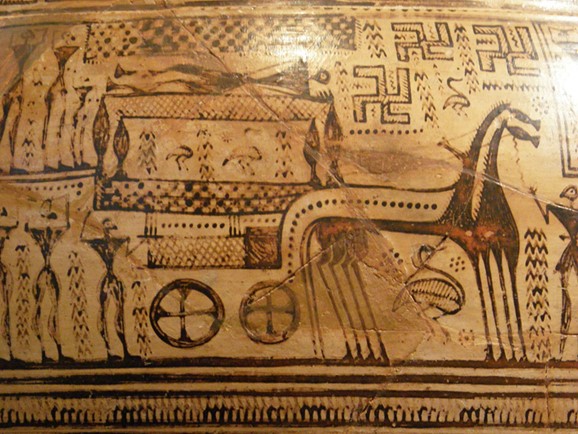
After three days of death the corpse was carried out (ekphora) at dawn to the burial site. As the Greek customs demanded, the deceased was placed with the cline (bed) on a chariot led by horses (Fig. 4). Romans initially were placing the body directly on the chariot, however later they adopted the Greek custom (Heller, 1932). The chariot was accompanied by the whole family and friends to the burial site. Professional singers sang mourning songs accompanied by dancers, while the males of the family wore the imagines (masks of the ancestor faces kept in the house) to carry/represent all the family [2]. In Roman times the prothesis and ekphora were assigned to professional funerary organizers (libitinarii). The ekphora did not reach the burial site directly. The first destination was the Agora or the Forum where the closest male relative of the deceased delivered the funeral oration (epitaphios, laudation funebris) praising the achievements and values of the deceased (Heller, 1932; Jones, 2013). In the case of low status individuals, ekphora followed modest practices, as prothesis did. The transportation of the body was conducted on a plan wooden platform (sandapilla) on a single horse chariot, with mourners and family members leading the companion directly to the burial site, where the closest male relative would deliver the funeral oration.
Figure 4. Crater of the Late Geometric Period I, displaying the <em>ekphora</em>.
Figure 4. Crater of the Late Geometric Period I, displaying the ekphora.
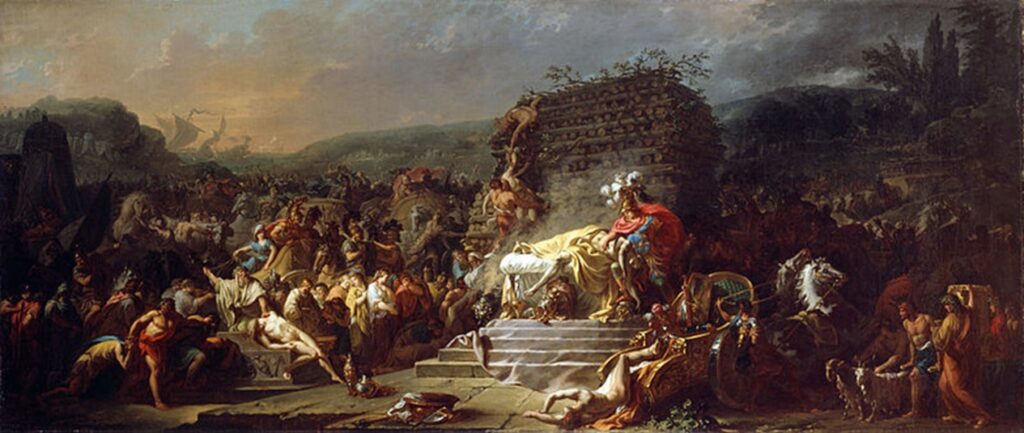
The burial site was by law, outside the city walls during the Hellenistic and Roman times. There is a special remark on the Twelve Tables of Roman Law [3] that states the individual’s obligation to be inhumed or cremated outside the city’s walls except for the especially highly honored personalities [4], [5], whose grave would be a mark of honor for the family. The burial site was a shared place for cremations and inhumations. Cremations followed the ordinary customs but instead of burying the deceased in the ground, a wooden platform was set to host the corpse ending to ashes (Kurtz & Boardman, 1971) (Fig. 5). There are neither detailed descriptions nor are they in a sufficient quantity to understand and record specific patterns of the pyres’ construction. The wood utilized differed based on the location, the kindling usually consisted of grape twigs, yeast etc., and the woods were piled in a grid pattern over a pit used for ventilation.
Figure 5. The funeral of Patroclus from Jacques Louis David (1748 - 1825).
Figure 5. The funeral of Patroclus from Jacques Louis David (1748 – 1825).
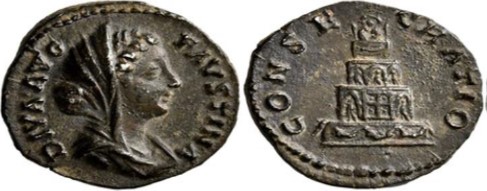
Ancient texts also mention a magnitude of the Hellenistic pyres, tall with significant wood load [6], [7] and high-quality material grave goods. Descriptions from Dio Cassius and iconography revealed a structural complexity and exaggeration in Roman cremations. The wooden platform was constructed with up to three-four levels, decorated with statues and garlands. Cremations were still practiced using wax effigies in case the Emperor or an honourable person did not want to be cremated but buried [8] (Fig. 6). At the top of the funerary pyre the body was placed, carrying in the mouth the coin required for crossing the Acheron River and was accompanied by sacrificed animals, [9], [10] family members [11], food and other objects that would reveal the significance of the deceased.
Figure 6. Coin of the era of Antonius Pius, displaying Faustina the Elder, surrounded by the inscription DIVA.AVGVSTA.FAVSTINA. On the reverse a four-level pyre is presented, decorated with garlands and columns. Atop of the pyre is a statue of Faustina the Elder mounting the quadriga, surrounded with the inscription CONSECRATIO (source: Mohammed-Moustafa, 2023).
After the cremation was set down, the cremators, in Roman times, extinguished the fire with water or wine [12], washed the bones with wine, and let them dry in linen. Archaeologically cremations have been categorized as primary and secondary. As a primary cremation is described the cremation that was conducted directly over the final burial deposition, while in secondary cremation, the cremators gathered the cremains and placed them in a container, urn or sarcophagus, which was then put in a grave. Despite cremations finding their dominance in the Roman world, the cremation is refered to as a primarily Greek burial practice as mentioned by Lucius Annaeus Cornutus [13] and was adopted by the Roman under the belief that cremation separated the soul from the rotten body and great men should be buried in this way. Romans had cremation in high esteem [14], [15] and considered it a practice for selected people, mostly of high status. It is highlighted that cremation should not be performed on infants as it would be a disgrace for the status of cremation.
The burial of the dead was of high importance for ancient Greeks and Latins, as the abandonment of the unburied body was a high dishonour and the soul of the dead man would be tormented until the rites were properly performed. The first mentions are found in the theatrical play of Sophocles “Antigone”, where Antigone’s brother was left unburied exposed to the scavengers and Antigone risked her life to dig a grave and put her brother in it because she could not bear her brother to be disgraced. Burial of the dead was always respected even during war [16]. As described by Diodorus after the victorious battle of Ptolemy against Perdiccas, Ptolemy cremated the dead of the enemy and sent their bones to their families [17].

Histological analysis

Histological analysis revealed the age-at-death of the individuals and the temperature estimation. The age-at-death of the individuals dating to the Hellenistic period ranged between 22-49 years old, with a mean age of 43 years, whilst for the individuals dating to the Roman period the age-at-death ranged between 16-45 years old, with a mean age of 38 years. The mean age-at-death was not statistically significant however, due to the small sample size the results should be considered with caution. However, a notable result is the representation of all age groups from non-adults to senile individuals. The estimated temperatures varied from 400-1000 degrees in both chronological periods.

Elemental analysis

Rations calculated from EDS measurements included:

  • Ca/P: indicating the crystallization level of hydroxyapatite
  • C/P: indicating the intensity of cremation
  • C/O: indicating the carbon oxide levels revealing the oxidation of the pyre
  • Ca/O: indicating the calcium oxide produced mainly in high temperature cremations

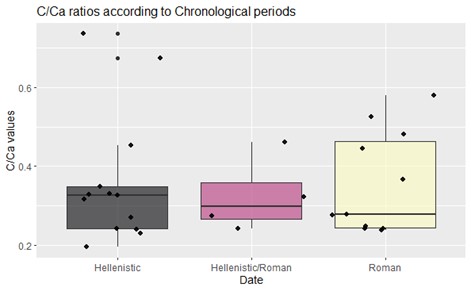
The Kendall correlation coefficient test resulted in weak correlation of the ratios with temperature and chronological period. This result is due to the impact of the small sample size. However, observable patterns were revealed through specific ratios. The Ca/P ratio derived from the outer and inner surface resulted no correlation with temperature, however, the ratio calculated from the measurements of the inner bone revealed a difference between chronological periods. The Ca/P ratios of the Hellenistic period reveal higher variation with values indicating a diversity in the crystallization pattern, whilst in the Roman period the Ca/P ratios are concentrated around the median value indicating a more standardized pattern of low crystallization with a few exceptions (Fig. 7). A similar pattern is also observable in the case of the C/O ratio of the outer surface. Although there was no correlation with temperature, a finer insight between chronological periods revealed a diversity of C/O values in the Hellenistic period, whilst a more distinct pattern with two clusters was observed in the Roman period (Fig. 8). The C/Ca ratios revealed opposite patterns with the values from the outer surface being more diverse in the Roman times than in the Hellenistic, while the values from the inner bone were equally diverse (Fig. 9).
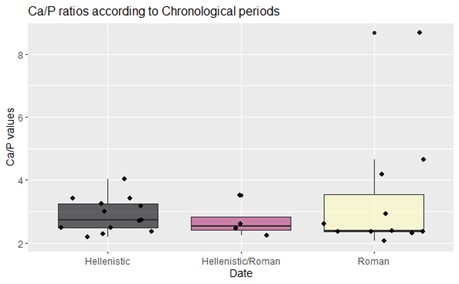
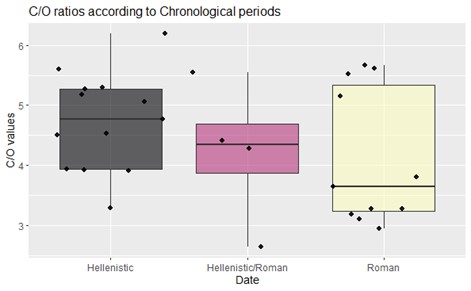
Figure 7. Boxplot presenting the distribution of Ca/P values according to chronological period.
Figure 8. Boxplot presenting the distribution of C/O values according to chronological period.
Figure 9. Boxplot presenting the distribution of C/Ca values according to the chronological period.
Despite the ratios further analysis revealed unique elemental signatures that exceeded the regular bone composition. One individual (METh_28c), whose femur was estimated to be burned approximately at 700°C, exhibited significantly high levels of Mn (outer 36.90 w% and inner 15.72 w%) and Fe (outer 4.68 w% and inner 2.70 w%), five more individuals exhibited high levels of Si (over 8 w%) and Al (over 5 w%) on the outer surface, one only on the Fe (10.92 w%) on the outer surface and one on the Si (9.29 w%) on the outer surface. The high concentration of these trace elements is found mainly on the outer surface of the bones indicating an external source of influence.
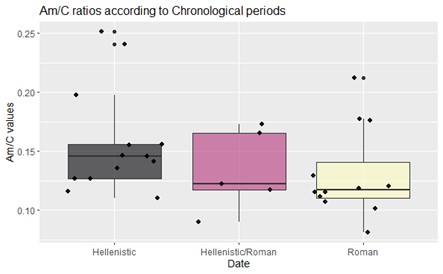
The majority of the indices calculated from the FTIR spectra were mostly indicative of the temperature. The Crystallinity Index factor (IRSF) was correlated with the increase of the carbon to carbonyl ratio (C/C) and the decrease of carbonates to phosphate ratios (C/P, BPI ad API) due to temperature effect (Fig. 10). Those results are in agreement with the histological results of temperature estimations and SEM-EDS results with high crystallinity of bones. The Collagen to phosphate ratio (Am/C) resulted in weak correlation with temperature and the rest of the indices and therefore a possible correlation with the time period was examined. The collagen to carbonate ratio (Am/C) signifies the collagen degradation and the increase of type -B carbonates indicating the dissolution of the organic material and bone crystallization. The Wilcoxon rank test resulted in a statistically significant difference between the two chronological periods, with higher ratios in the Hellenistic period and lower ratios in the Roman period. This result indicates that Roman cremated bones preserve collagen even when cremated in high temperatures.
The data for both elemental analyses are in agreement indicating that bone crystallinity variation is observed in the Roman period, while in the Hellenistic a more homogenous pattern of bone alteration dominates. Furthermore, the better collagen preservation in the Roman period indicates a different cremation practice or even body pre-cremation treatment.
Figure 10. Boxplot presenting the Am/C values according to the chronological periods.

Discussion

This study integrates ancient literary sources with histological, elemental, and molecular analyses of 32 cremated human remains in order to investigate cremation practices during the Hellenistic and Roman periods in Thessaloniki. Cremation was a complex procedure requiring extensive wood load, prolonged attentiveness, sufficient air ventilation for complete cremation and the expertise of the cremator. However, whether and which of these requirements were met since the beginning of the practice is largely unknown. By combining textual evidence with osteological and physicochemical data, this study offers a multi-level approach to funerary behaviour and the social significance of the cremation.

Cremations through Ancient literature

According to the beliefs tracked in Homeric literature, the flesh bonded the deceased to the earth and the purifying flames of cremation were the medium to liberty (Homer, Iliad, 23.65-107; Musgrave, 1990). However, as it was highlighted in ancient literature, cremation was not always practiced, and Cicero and Pliny the Elder agree on the primary dominance of inhumation (Cicero, De Legibus 2.22–24; Pliny the Elder, Naturalis Historia 7.187) and the origination of cremation as a burial practice from the Greeks (Cornutus, De natura deorum, 35). However, cremation as described in Latin poetry was a burial practice of high-status individuals, honourable men, kings and emperors (Tonybee, 1971). This is also supported archaeologically, by the royal Macedonian underground tombs of the Hellenistic (323 BCΕ – 31CE) period in Greece, with expensive and unique grave goods and high-size constructions that evince the high social status of the deceased (Andronikos, 1984; Green, 1990).
Roman poets described high magnitude cremations that were taking place even at the Forum with complex decoration and construction worthy only of emperors and men of high achievements (Ovid, Metamorphoses, 8.477-478; Heroides, 11.105-108; Virgil, Aeneid 6.212-235, 11.182-224). However, this is a controversial fact as the frequency of cremations in the Roman period increases significantly, indicating the possible existence of different strata within high status society (McKinley, J. I., 2000; Tonybee, 1971). Histological analysis revealed a wide age-at-death distribution in both chronological periods, including non-adults and adults of all age groups as well as female individuals. Other sites of the same period are in accordance with our results, with a significant number of female and non-adult individuals accepting the custom of cremation (McKinley, 1997). This demographic range contrasts with Roman literary traditions that associate cremation primarily with selected adults of high social status and exclude other groups. This result suggests that local funerary customs may have been more flexible than literary norms imply and that the social aspect of cremation is not fully presented.

Implementation of anthropological methods for the reconstruction of cremation practices and cultural influence

This limited understanding of the social interaction of cremation highlights the value of bioarchaeological approaches for reconstructing cremation practices beyond their symbolic or normative representation in texts. The histological and chemical data presented here reveal patterns of variability and standardization that are largely absent from the literary record. The overlap in temperature ranges between periods, revealed by the histological method, suggests high knowledge of pyrotechnology achieving high temperatures in both chronological periods, consistent with ancient descriptions of large and well-constructed pyres (McKinley, J.I., 2004; Tonybee, 1971). However, differences, although not statistically significant due to small sample size, have been detected through the molecular inspection of the cremated bones. The greater variability in Ca/P ratios observed in the Hellenistic samples suggests heterogeneous crystallization of hydroxyapatite, potentially reflecting variable burning conditions or post-cremation handling (Piga, 2016). In contrast, Roman samples exhibit more tightly clustered Ca/P values, indicating a more standardized crystallization pattern.
Comparable trends are observed in the C/O ratios, particularly on the outer bone surfaces. The wide dispersion of values in the Hellenistic period suggests variability in oxidation conditions, possibly related to differences in pyre ventilation, fuel composition, or extinguishing methods (Thompson, 2011). Roman samples, by contrast, display more structured clustering, implying greater control over combustion environments. This pattern is consistent with literary references to professional funerary personnel (libitinarii) and specialized cremators during the Roman period with high knowledge of pyrotechnology (Hope, 2009; Tonybee, 1971). The C/Ca ratios reveal a more complex pattern, with greater variability on the outer surfaces of Roman bones. This variability may reflect differential exposure to external materials introduced during Roman cremations, including offerings, architectural components of the pyre, or extinguishing agents such as wine or water (Ovid, Metamorphoses, 8.477-478; Heroides, 11.105-108; Virgil, Aeneid 6.212-235, 11.182-224). These results align with historical descriptions of Roman pyres as elaborate constructions incorporating symbolic and decorative elements.
A key finding of this study is the identification of elevated concentrations of trace elements, specifically those of Mn, Fe, Si, and Al, on individual level, predominantly localized on the outer bone surfaces. This spatial distribution strongly suggests an external source rather than intrinsic bone composition or post-depositional alteration (Piga, 2016). Possible contributors include pyre fuel, soil or sand introduced during combustion, ceramic or metal grave goods, or structural elements of the pyre. Environmental contamination is also a possible factor explaining the high concentrations of Fe, Si and Al, however, there are no data from soil composition to juxtapose with the bone’s composition.
The exceptionally high Mn and Fe concentrations observed in one individual may indicate direct contact with metal objects or mineral-rich materials, while elevated Si and Al levels are consistent with exposure to siliceous or clay-based substances (Thompson, 2011). These elemental signatures support the interpretation that cremation practices were not uniform but could be adapted to individual circumstances, identity, or social status. Such variability is consistent with literary accounts emphasizing the performative and personalized nature of elite Roman funerals (Hope, 2009). The contrast between prescriptive literary ideals and the diversity observed in skeletal signatures suggests that cremation practices varied considerably at the local and individual level.
FTIR-ATR analysis further elucidates the molecular effects of cremation. As expected, crystallinity indices and carbonate-to-phosphate ratios correlate strongly with temperature, corroborating histological temperature estimates and confirming the reliability of the applied methods (Piga, 2016; Thompson, 2011). In contrast, collagen-related indices display a different pattern. The significantly higher collagen-to-carbonate (Am/C) ratios observed in Hellenistic samples indicate greater collagen degradation, whereas Roman samples retain measurable collagen even at high estimated temperatures. This finding suggests that Roman cremation practices may have involved conditions leading to different bone mechanics. Literary references to extinguishing pyres with water or wine and washing the bones prior to deposition may be relevant in this context (Ovid, Metamorphoses, 8.477-478; Heroides, 11.105-108; Tonybee, 1971).
Overall, the results indicate a trend toward greater standardization of cremation outcomes during the Roman period, despite continued individual variability. This standardization is reflected in elemental ratios, molecular indices, and collagen preservation patterns and may be linked to broader processes of social organization, professionalization of funerary services, and institutionalization of ritual practices (Hope, 2009; McKinley, Jacqueline I, 2004). The emergence of specialized funerary roles in Roman society likely contributed to more consistent pyre construction and management. In contrast, the Hellenistic assemblage exhibits greater heterogeneity across multiple analytical parameters, potentially reflecting more localized and traditional cremation practices. This variability does not imply technological limitations but rather different social and organizational frameworks governing funerary behaviour.

Conclusions

This interdisciplinary study demonstrates that cremation practices in Hellenistic and Roman Thessaloniki were complex and shaped by technological, ritual, and social factors. While ancient literary sources emphasize ideological and ceremonial aspects of funerary rites, bioarchaeological evidence reveals differences in cremation management and standardization, particularly during the Roman period. The integration of textual, histological, elemental, and molecular data highlights the analytical potential of cremated remains and underscores the value of interdisciplinary approaches in the study of ancient mortuary practice. The results indicate that cremation was a well-established and symbolically meaningful practice in both periods; however, differences emerge in the degree of standardization, pyre management, and post-cremation treatment, particularly during the Roman period.

Acknowledgments

I would like to thank my CHS supervisor Prof. Bazou Athena for her guidance and advices during my fellowship and reviewing the present article. I also thank my PhD supervisor Prof. Papageorgopoulou Christina for entrusting me conducting this research using the infrastructure of Laboratory of Biological Anthropology of DUTh, for supporting and consulting regarding the anthropological methods, and providing the skeletal material. I would also like to thank the CRETUS – Cross-disciplinary Research Center in Environmental Technologies of the Universidade de Santiago de Compostela for providing me with the FTIR-ATR results and Antonio Martínez Cortizas and Olalla López-Costas for guiding me in the interpretation of the spectra. I thank the Digital Manufacturing and Materials Characterization (DMMC) Lab of International Hellenic University and Emmanuil Tzimtzis for providing me with the SEM-EDS data. Finally, I am grateful to the Ephorate of Antiquities of the city of Thessaloniki for entrusting me with the human skeletal material.

Bibliography

Andronikos, M. (1984). Vergina: The Royal Tombs. Ekdotike Athenon.
Appianus. Roman History (Annibaica, Iberica).
Claudius Aelianus. De Natura Animalium.
Cicero. De Legibus.
Colmenares-Prado, M., Martínez Cortizas, Pettersson, M., & López-Costas, O. (2026). Using FTIR-ATR, analytical colour and mercury for unravelling the cremation ritual of Tyresta Viking Age burial mound (South-Central Sweden). Archaeological and Anthropological Sciences, 18: 33. https://doi.org/10.21203/rs.3.rs-7273566/v1
Cornutus, A. L. De Natura Deorum.
Davies, D. J., & Mates, L. H. (Eds.). (2005). Encyclopedia of Cremation (1st ed.). Routledge.
Demšar, J., Curk, T., Erjavec, A., Gorup, Č., Hočevar, T., Milutinovič, M., Možina, M., Polajnar, M., Toplak, M., Starič, A., Štajdohar, M., Umek, L., Žagar, L., Žbontar, J., Žitnik, M., & Zupan, B. (2013). Orange: Data Mining Toolbox in Python. Journal of Machine Learning Research, 14(71), 2349–2353.
Diodorus Siculus. Historical Library.
Ellingham, S., Thompson, T., & Islam, M. (2017). Scanning Electron Microscopy-Energy-Dispersive X-Ray (SEM/EDX): A Rapid Diagnostic Tool to Aid the Identification of Burnt Bone and Contested Cremains. Journal of Forensic Sciences, 63(2):504-510. https://doi.org/10.1111/1556-4029.13541
Fahlander, F. (2025). In Sheep’s Clothing? Humans and Other-Than-Humans in Iron Age Cremation Assemblages in North Spånga, Sweden. Current Swedish Archaeology, 32(1), 99–128. https://doi.org/10.37718/CSA.2024.5
Gil-Drozd, A. (2011). The Origins of Cremation in Europe. Analecta Archaeologica Ressoviensia, 5, 9-94. https://api.semanticscholar.org/CorpusID:86855950
Gonçalves, D., Cunha, E., & Thompson, T. J. U. (2015). Estimation of the pre-burning condition of human remains in forensic contexts. International Journal of Legal Medicine, 129(5), 1137–1143. https://doi.org/10.1007/s00414-014-1027-8
Green, P. (1990). Alexander to Actium: The Historical Evolution of the Hellenistic Age. University of California Press.
Heller, J. L. (1932). Burial Customs of the Romans. The Classical Weekly, 25(24), 193–197. https://doi.org/10.2307/4339101
Herodian. Historia Augusta.
Homer. Iliad.
Hope, V. (2009). Roman Death: The Dying and the Dead in Ancient Rome. Continuum.
Jones, R. (2013). Burial Customs of Rome and the Provinces. In J. Harries (Ed.), The Roman World (1st ed.), Routledge, 812-837.
Juvenal. Satirae.
Lamprou, V., Palli, O., & Aidonis, A. (2018). Επώνυμοι και ανώνυμοι. Έθιμα ταφής στη ρωμαϊκή Θεσπρωτία. In V. Di Napoli, F. Camia, V. Evangelidis, D. Grigoropoulos, D. Rogers, S. Vlizos (Eds.), What’s New in Roman Greece? Recent Work on the Greek Mainland and the Islands in the Roman Period. NATIONAL HELLENIC RESEARCH FOUNDATION / INSTITUTE OF HISTORICAL RESEARCH, 505-518.
Lemmers, S. (2012). Burned culture: Osteological research into Urnfi eld cremation technology and ritual in the South of the Netherlands. LUNULA. Archaeologia Protohistorica, 20, 81-88.
Lippok, F. E. (2020). The pyre and the grave: Early medieval cremation burials in the Netherlands, the German Rhineland and Belgium. World Archaeology, 52(1), 147–162. https://doi.org/10.1080/00438243.2020.1769297
Masotti, S., Mongillo, J., & Gualdi-Russo, E. (2020). Burned human remains: Diachronic analysis of cremation rituals in necropolises of northern Italy. Archaeological and Anthropological Sciences, 12(3), 74. https://doi.org/10.1007/s12520-020-01013-5
McKinley, J. I. (1997). Bronze Age “barrow” cremations: A reappraisal. Proceedings of the Prehistoric Society.
McKinley, Jacqueline I. (2000). The analysis of cremated bone. In Human Osteology. Greenwich Medical Media.
McKinley, Jacqueline I. (2004). Compiling a skeletal inventory: Cremated human bone. British Archaeological Reports.
Mohammed-Moustafaa, A. I. (2023). The Representation of Pyre in Greek and Roman Arts, Minia Journal of Tourism and Hospitality Research. 16(1).
Niekus, M. J. L. T., Zeiler, J., & Smits, L. (2016). A small Middle Mesolithic cemetery with cremation burials from Rotterdam, the Netherlands. In J. M. Grünberg, B. Gramsch, L. Larsson, J. Orschiedt, & H. Meller (Eds.), Mesolithic burials—Rites, symbols and social organization of early postglacial communities, Proceedings of the International Conference Halle (Saale), Germany, 18th-21st September 2013. Landesamt für Denkmalpflege und Archäologie Sachsen-Anhalt – Landesmuseum für Vorgeschichte.
Nock, A. D. (1932). Cremation and Burial in the Roman Empire. Harvard Theological Review, 25(4), 321–359. Cambridge Core. https://doi.org/10.1017/S0017816000021313
Ovid. Heroides.
Ovid. Metamorphoses.
Parditka, G., & Duffy, P. R. (2023). From the ashes of Bronze Age fires: A framework for comparison across body treatments. Journal of Anthropological Archaeology, 71, 101525. https://doi.org/10.1016/j.jaa.2023.101525
Parthenius. Narrationes Amatoriae.
Pearce, J. (2017). Introduction: Death as a process in Roman funerary archaeology. In J. Pearce & J. Weekes (Eds.), Death as a Process (1st ed). Oxbow Books., 1–26. http://www.jstor.org/stable/j.ctt1pk86q7.5
Piga, G. (2016). Structural and chemical characterization of cremated bones. Journal of Archaeological Science, 65, 1–12.
Pliny the Elder. Natualis Historia.
Polybius. Histories.
Rebay-Salisbury, K. (2017). Rediscovering the Body: Cremation and Inhumation in Early Iron Age Central Europe. In J. Cerezo-Román, A. Wessman, & H. Williams (Eds.), Cremation and the Archaeology of Death (p. 0). Oxford University Press. https://doi.org/10.1093/oso/9780198798118.003.0010
Stamataki, E., Kontopoulos, I., Salesse, K., McMillan, R., Veselka, B., Sabaux, C., Annaert, R., Boudin, M., Capuzzo, G., Claeys, P., Dalle, S., Hlad, M., Sengeløv, A., Vercauteren, M., Warmenbol, E., Tys, D., De Mulder, G., & Snoeck, C. (2021). Is it hot enough? A multi-proxy approach shows variations in cremation conditions during the Metal Ages in Belgium. Journal of Archaeological Science, 136, 105509. https://doi.org/10.1016/j.jas.2021.105509
Stamataki, E., Salesse, K., Capuzzo, G., Kontopoulos, I., Hlad, M., Dalle, S., Sabaux, C., Veselka, B., Annaert, R., Boudin, M., Claeys, P., Sengeløv, A., Vercauteren, M., Warmenbol, E., Claes, B., Destexhe, G., Cattelain, L., Willems, S., Mulder, G. D., & Snoeck, C. (2025). The Roman way: Investigating the cremation conditions during the Roman period in Belgium using a multi-proxy and multi-sampling approach. Journal of Archaeological Science: Reports, 64, 105156. https://doi.org/10.1016/j.jasrep.2025.105156
Stig-Sørensen, M.-L., & Rebay-Salisbury, K. (Eds.). (2023). Brief History of Urns, Urnfields, and Burial in the Urnfield Culture. In Death and the Body in Bronze Age Europe From Inhumation to Cremation. Cambrdge University Press, 15–35.
Suetonius. Lives of the Ceasars.
Thompson, T. J. U. (2011). FTIR spectroscopy in cremated bone analysis. Journal of Archaeological Science, 38, 555–563.
Tonybee, J. M. C. (1971). Death and Burial in the Roman World. Thames & Hudson.
Virgil. Aeneid.
Walker, P. L., Miller, K. W. P., & Richman, R. (2008). Time, Temperature, and Oxygen Availability: An Experimental Study of the Effects of Environmental Conditions on the Color and Organic Content of Cremated Bone. In C. W. Schmidt & S. A. Symes (Eds.), The Analysis of Burned Human Remains (pp. 129–xi). Academic Press. https://doi.org/10.1016/B978-012372510-3.50009-5
Wolska, B., Gonçalves, D., Dudek, M., Krupski, M., Marjak, J., & Belka, Z. (2024). Being “elite” among Goths: Multi-proxy analysis of a Roman period cremation princely grave from Czarnówko (Pomerania, North Poland). Archaeological and Anthropological Sciences, 16(5), 67. https://doi.org/10.1007/s12520-024-01975-w

Footnotes

[ back ] 1. Juvenal, 3.171-172: “Pars magna Italiae est, si verum admittimus, in qua nemo togam sumit nisi mortuus” (in translation: “A large part of Italy, if we speak the truth, is such that no one puts on the toga there except when dead.”)
[ back ] 2. Polybius, 6.53.10: «τὸ γὰρ τὰς τῶν ἐπʼ ἀρετῇ δεδοξασμένων ἀνδρῶν εἰκόνας ἰδεῖν ὁμοῦ πάσας οἷον εἰ ζώσας καὶ πεπνυμένας τίνʼ οὐκ ἂν παραστήσαι; τί δʼ ἂν κάλλιον.» (in translation: “For to see at once all the images of men celebrated for virtue, as if they were alive and full of intelligence—how could one not be impressed? And what could be more beautiful?”). Δεν χρειάζεται ο τίτλος του έργου. Μόνο τις Ιστορίες είχε γράψει ο Πολύβιος.
[ back ] 3. Cicero, De Legigbus, 2.58: “Sed <ut> in urbe sepeliri lex vetat, sic decretum a pontificum collegio, non esse ius in loco publico fieri sepulcrum” (in translation: “But just as the law forbids burial within the city, so the decree of the college of pontiffs holds that it is not lawful for a tomb to be made in a public place.”).
[ back ] 4. Cicero, De Legibus, 2.58: “Quid quod post XII in urbe sepulti sunt clari viri?” (in translation: “What then of the fact that, even after the Twelve Tables, eminent men were buried within the city?”).
[ back ] 5. Suetonius, Lives of the Caesars, 84.1: “Funere indicto rogus extructus est in Martio campo iuxta Iuliae tumulum.” (in translation: “When the funeral was announced, a pyre was erected in the Campus Martius near the tomb of Julia”).
[ back ] 6. Appianus, Roman History: Iberica, 317.1-3: «Οὐρίατθον μὲν δὴ λαμπρότατα κοσμήσαντες ἐπὶ ὑψηλοτάτης πυρᾶς ἔκαιον ἱερεῖά τε πολλὰ ἐπέσφαττον αὐτῷ,…» (in translation: “They adorned Viriathus most splendidly and burned him upon a very lofty pyre, and they sacrificed many victims to him”).
[ back ] 7. Virgil, Aeneid, 6. 214-216: “…principio pinguem taedis et robore secto ingentem struxere pyram, cui frondibus atris intexunt latera et feralis ante cupressos constituunt, decorantque super fulgentibus armis.’ (in translation: First they raised a huge pyre, heavy with cut oak and pine, weaving the sides with dark foliage, set funereal cypress in front, and decorated it above with shining weapons.)
[ back ] 8. Herodian, Historia Augusta, 4.2.2–11.
[ back ] 9. Claudius Aelianus, De natura animalium, 7.40.1-7: «Ἴδια δὲ ἄρα κυνῶν καὶ ἐκεῖνα εὐνοίας ὑπερβολὴν πᾶσαν ἐκνενικηκότα. Πώλῳ μὲν τῷ τῆς τραγῳδίας ὑποκριτῇ ὁ κύων ὁ τρόφιμος αὐτοῦ τεθνεῶτι καὶ καομένῳ ἑαυτὸν συγκατέπρησε τῇ πυρᾷ ἐμπηδήσας. καομένῳ δὲ καὶ Μέντορι σκύλακες Ἐρετρικαὶ ἑαυτὰς συγκατέπρησαν ἑκοῦσαι κοινωνήσασαι τοῦ τέλους.» (in translation: “Indeed, these same dogs also surpassed all bounds in showing affection. In the case of Polus, the tragic actor, his own cherished dog, upon Polus’ death, threw itself into the fire and perished along with him. Similarly, with Mentor, the Eretrian hounds voluntarily threw themselves into the fire, willingly sharing in his end.”)
[ back ] 10. Parthenius, Narrationes amatoriae, 10.4.1-6 : «Κυάνιππος δέ, ὡς ἐπελθὼν κατελάβετο λελωβημένην τὴν Λευκώνην, μεγάλῳ τε ἄχει ἐπληρώθη καὶ ἀνακαλεσάμενος τοὺς ἀμφ’ αὑτὸν ἐκείνην μὲν πυρὰν νηήσας ἐπέθετο· αὐτὸς δὲ πρῶτον μὲν τὰς κύνας ἐπικατέσφαξε τῇ πυρᾷ, ἔπειτα δὲ πολλὰ ἀποδυρόμενος τὴν παῖδα διεχρήσατο ἑαυτόν.» (in translation: “And Kyannippos, when he arrived, found Leukone injured, and he was filled with great grief. Calling those around him, he set fire to her pyre. First, he slaughtered the dogs in the fire, and then, after undressing her extensively, he used the girl himself.”)
[ back ] 11. Claudius Aelianus, De natura animalium, 2.40.1-6, «Ἦν δὲ ἄρα γένος ἀετῶν καὶ πρὸς τοὺς τρέφοντας φιλόστοργον, ὥσπερ οὖν καὶ ὁ τοῦ Πύρρου. τοῦτόν τοί φασι καὶ ἐπαποθανεῖν τῷ δεσπότῃ τροφῆς ἀποστάντα. ἤδη δὲ καὶ ἀνδρὸς ἰδιώτου ἀετὸς τρόφιμος καομένου τοῦ δεσπότου ἐς τὴν πυρὰν ἑαυτὸν ἐνέβαλεν.» (in translation: “There was, then, a kind of eagle that was affectionate toward those who raised it, just as in the case of Pyrrhus’ eagle. They say that it even died when its master of sustenance died. Indeed, an eagle belonging to a private man, upon the death of its master, threw itself into the fire.”)
[ back ] 12. Virgil, Aeneid, 6.227: “reliquias vino et bibulam lavere favillam.” (in translation: “they washed the remains with wine and the damp ashes.”)
[ back ] 13. Lucius Annaeus Cornutus, De natura deorum, 35: «φανερὸν δὲ πόθεν καὶ ὁ Κωκυτὸς καὶ ὁ Πυριφλεγέθων τὴν κλῆσιν ἔσχον, πάλαι καιόντων τοὺς νεκροὺς καὶ κωκυτὸν ἐγειρόντων τῶν Ἑλλήνων, διὰ τοῦτο καὶ δαίμονας αὐτοὺς ἀπὸ τοῦ κεκαῦσθαι καλούντων». (in translation: “It is also clear whence both Cocytus and Phlegethon received their names: in ancient times, when the dead were being burned and the Greeks were raising wailing cries (Cocytus) over them, for this reason they also call these spirits ‘those who have been burned’)
[ back ] 14. Ovid, Metamorphoses, 8.477-478: “nam postquam pestifer ignis convaluit, ‘rogus iste cremet mea viscera’ dixit” (in translation : “Now, as the baleful fire strengthens, she cries ‘Let this be the funeral pyre that cremates my child.”)
[ back ] 15. Ovid, Heroides, 11.105-108: “fertis, Erinyes atrae, et meus ex isto luceat igne rogus! nubite felices Parca meliore sorores, amissae” ((in translation: “Furies bear the black torches you bear, to me, and from those fires light my funeral pyre! My happy sisters wedded to a better fate: be lost to me but still remember me!”).
[ back ] 16. Appianus, Roman History: Annibaica, 215-217: «ἄφνω δὲ πολλῶν τῶν Λιβύων φανέντων καὶ πανταχόθεν αὐτῷ προσπεσόντων οἱ μὲν οὐραγοῦντες Ῥωμαίων πρῶτοι φυγῆς ἦρχον, ὁ δὲ Μάρκελλος ὡς ἑπομένων αὐτῶν ἐμάχετο γενναίως, μέχρι κατακοντισθεὶς ἀπέθανε. καὶ αὐτοῦ τῷ σώματι ὁ Ἀννίβας ἐπιστάς, ὡς εἶδε τὰ τραύματα πάντα ἐπὶ τῶν στέρνων, ἐπῄνεσε μὲν ὡς στρατιώτην, ἐπέσκωψε δὲ ὡς στρατηγόν. καὶ τὸν δακτύλιον αὐτοῦ περιελὼν τὸ μὲν σῶμα ἔκαυσε λαμπρῶς καὶ τὰ ὀστᾶ τῷ παιδὶ προσέπεμψεν ἐς τὸ Ῥωμαίων στρατόπεδον» (in translation : “Suddenly, with many of the Libyans appearing and attacking him from all sides, some of them, fleeing first from the Romans, began to flee, while Marcellus fought bravely against those following him, and, after being pierced by spears, he died. Standing over his body, Hannibal, seeing all the wounds upon his chest, praised him as a soldier but reproached him as a general. Taking his ring, he burned the body splendidly and sent the bones to the Roman camp with his attendant.”).
[ back ] 17. Diodorus Siculus, Historical Library, (18,36),«ὁ δὲ Πτολεμαῖος τὰ σώματα τῶν πρὸς αὐτὸν ἐκπεσόντων καύσας καὶ τῆς ἁρμοζούσης κηδείας ἀξιώσας ἀπέστειλε τὰ ὀστᾶ πρὸς τοὺς οἰκείους τε καὶ φίλους τῶν τετελευτηκότων.» (in translation: “But Ptolemy, after burning the bodies of those who had fallen on his side and granting them the burial rites that were fitting, sent their bones to the relatives and friends of the deceased.”).